
Call us now :08071630275
 Send Inquiry
 Send Inquiry
Waste Water MBR Membrane Bioreactor
Price 18000 INR/ Unit
MOQ : 01 Unit
Waste Water MBR Membrane Bioreactor Specification
- Power Consumption
- 210 kW (depending on capacity)
- Efficiency (%)
- >98%
- Flow Rate
- 0.530 m/h
- Noise Level
- < 60 dB
- Ph Level
- 69
- Pump Type
- Centrifugal/Recirculation Pump
- Technology
- MBR (Membrane Bioreactor)
- Frequency
- 50/60 Hz
- Water Out Conductivity
- < 10 S/cm
- Recycle Rate
- High (Up to 99%)
- Feature
- Compact Design, High Efficiency, Low Sludge Production, Integrated System
- Water in conductivity
- Up to 2000 S/cm
- Usage & Applications
- Sewage, Effluent, and Industrial Waste Water Treatment
- Water Source
- Industrial & Municipal Waste Water
- Purity Level
- Up to 99.9%
- Product Type
- Membrane Bioreactor (MBR) for Wastewater Treatment
- Material
- PVDF (Polyvinylidene Fluoride) membrane, SS304/316 frame
- Automatic Grade
- Fully Automatic
- Volume
- Customizable (Standard: 500L - 5000L)
- Power Source
- Electric
- Drive Type
- Electric Motor Driven
- Voltage
- 220-380 V AC
- Filter Type
- MBR Hollow Fiber/Flat Sheet Membrane
- Capacity
- 10 m/day 1000 m/day
- Installation Type
- Modular/Skid Mounted
- Membrane Pore Size
- 0.10.4 m
- Sludge Age (SRT)
- 3060 days
- Clean-in-Place (CIP) System
- Available
- TSS Removal Rate
- >99%
- COD Removal Rate
- >90%
- BOD Removal Rate
- >99%
- Discharge Standard
- Meets International/Local Effluent Standards
- Transmembrane Pressure
- < 0.5 bar
- Working Temperature Range
- 5 to 45C
- Inlet Water Type
- Raw Sewage, Municipal, Industrial
- Service Life of Membrane
- 35 years
Waste Water MBR Membrane Bioreactor Trade Information
- Minimum Order Quantity
- 01 Unit
- Supply Ability
- 20 Units, , Per Week
- Delivery Time
- 15-20 Days
About Waste Water MBR Membrane Bioreactor
Product details
| Water Source Type | Waste Water |
| Treatment Technique | Membrane Bioreactor |
| Capacity | Customised as per customer requirement |
| Water Source | Waste Water |
| Usage/Application | STP/ETP |
| Industry | All |
| Automation Grade | Semi-Automatic |
| Installation Type | Prefabricated |
Advanced Filtration Technology
Utilizing MBR with PVDF hollow fiber or flat sheet membranes (0.1-0.4 m pore size), this system achieves exceptional removal of suspended solids, BOD, and COD from industrial and municipal wastewaters. Its robust materials and integrated design ensure stable operation, long service life, and effective pollutant separation even at high flow rates and variable inlet conditions.
Efficient and Eco-Friendly Performance
With a sludge age of 30-60 days and over 98% treatment efficiency, this bioreactor minimizes waste volumes and operational costs. It supports a wide pH range (6-9), low power consumption, and generates minimal noise (<60 dB), making it ideal for installations where energy efficiency and environmental compliance are paramount.
Flexible Integration and Customization
The system's modular, skid-mounted design allows easy installation and scalability, accommodating treatment capacities from 10 to 1000 m3/day. Customizable volumes (500L-5000L standard) and automatic controls facilitate seamless integration into new or existing water treatment facilities, ensuring adaptability to varied water qualities and site needs.
FAQ's of Waste Water MBR Membrane Bioreactor:
Q: How does the MBR membrane bioreactor effectively remove pollutants from wastewater?
A: The bioreactor utilizes PVDF membranes with pore sizes between 0.1-0.4 m, which efficiently filter out suspended solids, bacteria, and organic substances. This advanced filtration, combined with extended sludge age (SRT 30-60 days), results in TSS and BOD removal rates exceeding 99%, and COD removal rates above 90%.Q: What types of water sources and wastewaters can be treated with this MBR system?
A: This system is designed for raw sewage, municipal wastewater, and various industrial effluents with conductivity up to 2000 S/cm. It reliably produces effluent that meets both international and local standards for discharge or reuse.Q: When is the Clean-in-Place (CIP) system used, and what is its benefit?
A: The integrated CIP system is utilized when membrane performance decreases due to fouling. Scheduled or sensor-triggered CIP restores membrane permeability, ensures operational efficiency, and extends membrane service life (3-5 years) with minimal operator involvement.Q: Where can this MBR waste water treatment system be installed?
A: Thanks to its modular, skid-mounted construction and compact design, the system is well-suited for a wide range of installations, including industrial sites, municipal treatment facilities, and locations with space constraints. Customizable volumes and automation make on-site implementation straightforward.Q: What is the process flow in the MBR system for treating wastewater?
A: Wastewater first enters the bioreactor, where organic matter is biologically degraded by activated sludge. The mixture then passes through the membrane unit, where suspended solids and contaminants are separated, leaving high-purity treated water with less than 10 S/cm conductivity.Q: How does the system support sustainability and efficient operation?
A: By achieving high pollutant removal rates (>98%), reducing sludge production, and offering a high water recycle rate (up to 99%), the system supports water reuse and resource conservation. Automatic controls, energy-efficient motors, and low operational noise further enhance its sustainability profile.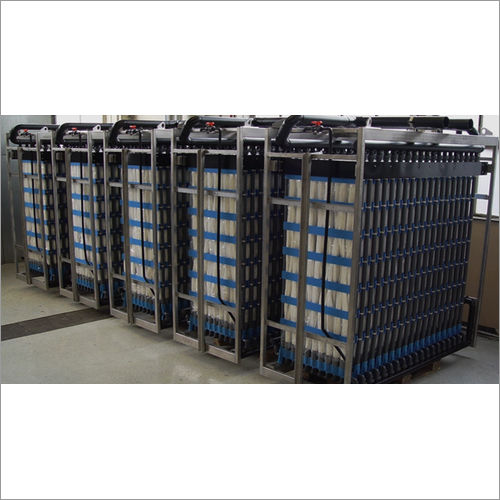
Tell us about your requirement

Price:
Quantity
Select Unit
- 50
- 100
- 200
- 250
- 500
- 1000+
Additional detail
Mobile number
Email


 Send Inquiry
Our Products
- Reverse Osmosis Plant
- FRP Vessel
- Dosing Pump
- Control Valve
- Effluent and Sewage Treatment Plant
- Ultrafiltration Membrane and Plant
- Water Softening Plant
- Filter Housing
- RO Membrane
- Membrane Bioreactor
- Electric Pump
- Demineralization Plant
- Submersible Pump
- Hydropneumatic Tank
- Pump Repairing Services
- Water Treatment Component
- Mineral Water Plant

Okhla Phase -I NEW DELHINew Delhi - 110020, India

Mr Anuj Jha
(Executive Director)
Mobile :08071630275
 Send Inquiry
 Send SMS
Developed and Managed by Infocom Network Private Limited.


